

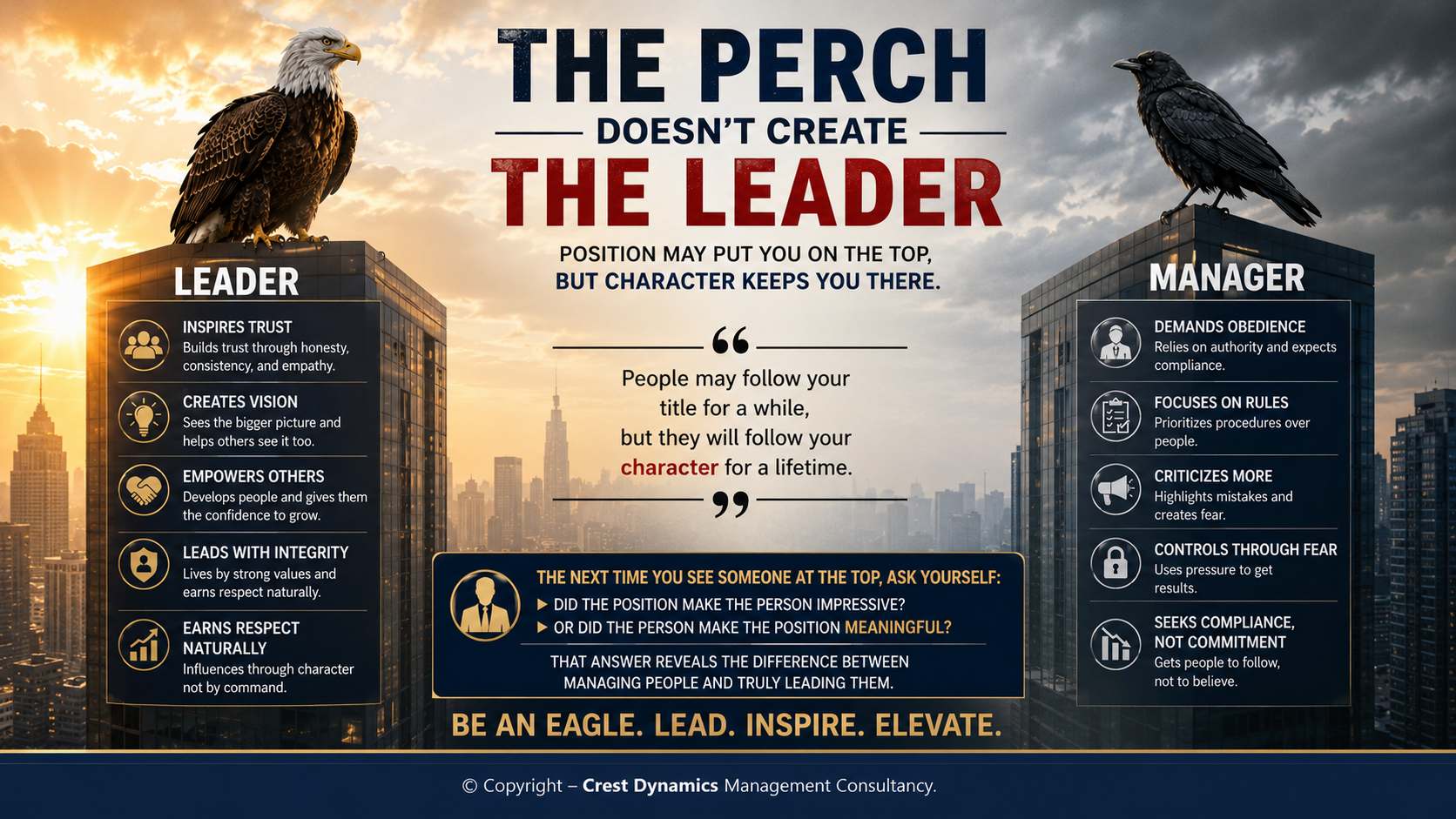
An eagle sitting on top of a skyscraper looks majestic. People admire it instantly. A crow sitting at the same height rarely receives the same reaction. The building is identical. The height is identical. The difference is the bird.
Leadership works the same way.
A title, corner office, or senior designation may place someone at the “top of the building,” but position alone never creates admiration, trust, or influence. True leadership comes from character, vision, and the ability to inspire others.
Many managers confuse authority with leadership. A manager can control schedules, approve leave applications, monitor performance dashboards, and enforce policies. But leadership begins where authority ends.
Consider two department heads in the same company.
Manager A constantly reminds employees who is “in charge.” Meetings are filled with instructions, criticism, and pressure. Employees obey — but only because they must. The moment the manager leaves the room, motivation disappears.
Leader B, however, creates belief. This person listens, mentors, encourages innovation, and stands beside the team during difficult moments. Employees work harder not because they are forced to, but because they feel valued and inspired.
Both individuals sit on the same organizational “building.” Yet one resembles the eagle, while the other becomes the crow.
History repeatedly proves this truth. Great leaders are remembered not for their titles, but for their influence. People followed leaders like Nelson Mandela or Mahatma Gandhi not because of corporate rank, but because they carried vision, courage, and conviction that moved hearts.
The modern workplace desperately needs more eagles — leaders who elevate people rather than intimidate them.
Interestingly, an eagle reaches high places because it has trained itself to fly through storms. Crows often move in noise and distraction. Likewise, leaders rise through discipline, resilience, emotional intelligence, and clarity of purpose. Managers who rely only on authority may gain compliance, but leaders gain commitment.
So, the next time you see someone sitting at the top, ask yourself an important question:
Did the position make the person impressive?
Or did the person make the position meaningful?
That answer reveals the difference between managing people and truly leading them.
And perhaps that is why some individual command attention the moment they enter a room — even before they say a single word.