

For years, we’ve been told that success belongs to those with the best qualifications, the longest list of certifications, and the most advanced technical skills. We polish our CVs, master new software, and keep pace with rapidly changing technology—all in the hope of staying relevant.
But what if the future of work is asking for something more?
Technology is becoming increasingly accessible. Artificial intelligence can generate reports, analyze data, write code, and even assist in making business decisions. As technical capabilities become more common, they become less of a differentiator.
The real competitive advantage is no longer just what you know.
It’s how you think.
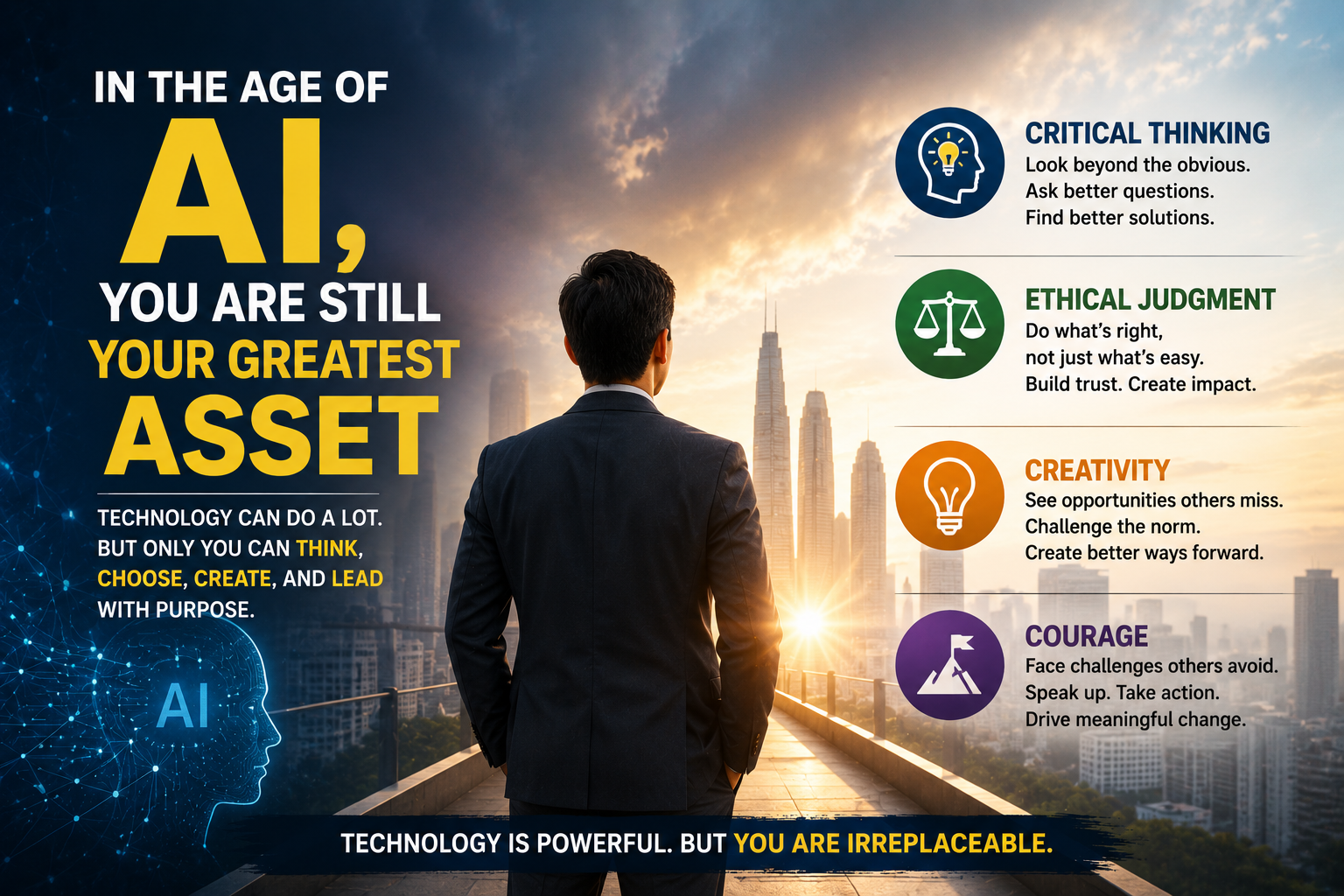
The professionals who will make the greatest impact are not necessarily those with the most impressive CVs or the latest technological expertise. They are the people who cultivate critical thinking, exercise ethical judgment, embrace creativity, and have the courage to tackle problems that others avoid.
Critical Thinking: Looking Beyond the Obvious
In today’s workplace, information is everywhere. Answers are available within seconds. Yet finding answers isn’t the same as asking the right questions.
Critical thinkers challenge assumptions. They analyze situations from different perspectives. They don’t simply accept the first solution—they seek the best one.
Organizations don’t just need employees who follow instructions. They need people who can navigate ambiguity, connect ideas, and make sound decisions when the path forward isn’t obvious.
Ethical Judgment: Doing What’s Right When No One Is Watching
Technology can automate processes, but it cannot replace integrity.
As businesses increasingly rely on AI and data-driven decisions, ethical judgment becomes even more valuable. Every decision has consequences—not just for profits, but for employees, customers, communities, and society.
The workplace of the future will reward individuals who ask not only, “Can we do this?” but also, “Should we do this?”
Trust has become one of the most valuable currencies in leadership.
Creativity: Seeing Opportunities Others Miss
Innovation rarely comes from doing what everyone else is doing.
Creative professionals connect unrelated ideas. They challenge outdated processes. They imagine better ways of serving customers, improving operations, and solving problems.
Creativity isn’t limited to designers or marketers.
Engineers, accountants, HR professionals, project managers, and frontline employees all benefit from creative thinking. Every role has opportunities to improve systems, simplify complexity, and create value.
In a world where automation handles repetitive work, creativity becomes increasingly human—and increasingly indispensable.
Courage: Solving the Problems Everyone Else Avoids
Every workplace has difficult conversations.
Unresolved conflicts.
Inefficient processes.
Decisions that everyone recognizes but few are willing to address.
The individuals who create lasting impact are often those who step forward when others step back.
Courage isn’t about having all the answers.
It’s about being willing to ask difficult questions, challenge the status quo respectfully, and take ownership of problems instead of waiting for someone else to solve them.
Progress has always belonged to those willing to confront discomfort.
Building the Future Workforce
Technical skills will always matter. Continuous learning remains essential. The ability to work with emerging technologies will continue to open doors.
But technology alone will never define great professionals.
The future belongs to people who combine technical competence with wisdom, empathy, sound judgment, and the confidence to think independently.
Employers can hire skills.
Leaders develop people who can think.
A Final Reflection
Your CV may get you an interview.
Your technical expertise may earn you a job.
But your ability to think critically, act ethically, create boldly, and face difficult challenges with courage will define your career—and your legacy.
As technology continues to evolve, perhaps the most valuable investment we can make is not only in learning new tools but also in strengthening the qualities that make us uniquely human.
Because in the workplace of tomorrow, it won’t simply be those who possess the most advanced technology or the most impressive CV who stand out.
It will be those who have the mindset and courage to solve the problems that technology alone never can.