

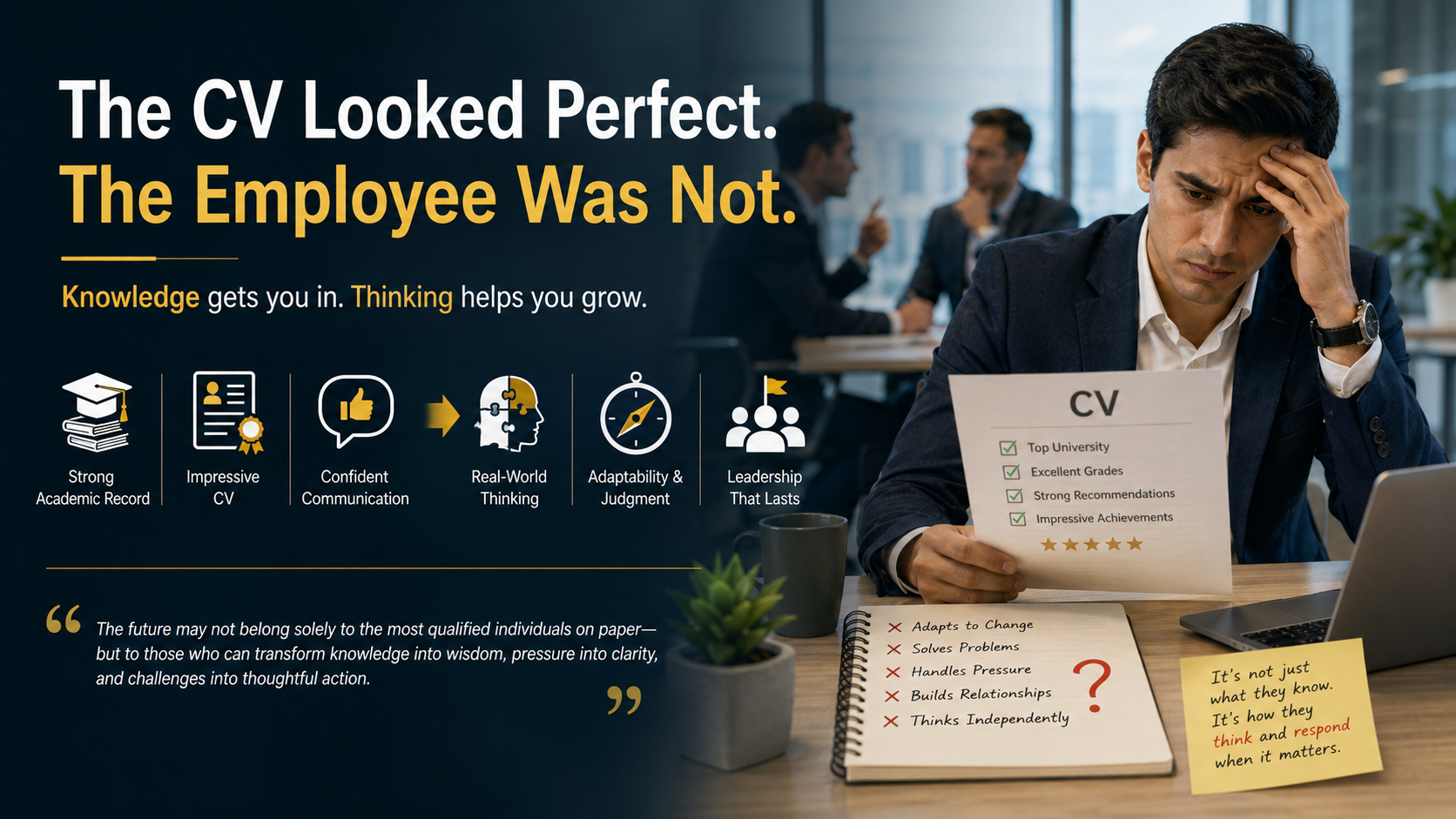
A multinational company once hired a young graduate with an outstanding academic record, glowing recommendations, and a beautifully crafted CV. The interview panel was impressed. Top university. Excellent grades. Confident communication. Everything suggested future leadership potential.
Six months later, the reality looked very different.
The graduate possessed knowledge — plenty of it. Technical concepts were memorized flawlessly. Reports were written well. Presentations were polished. But when unexpected problems appeared, decision-making became difficult. Team disagreements created tension. Pressure affected behaviour. Independent thinking was limited whenever situations moved beyond textbook scenarios.
This story is not uncommon in today’s workplace.
Modern organizations are increasingly attracted to strong academic credentials, prestigious universities, and dynamic resumes. Naturally so. A CV is often the first indicator of discipline, intelligence, and effort. Yet many leaders quietly admit that workplace performance depends on something far deeper than qualifications alone.
Knowledge and thinking are not the same thing.
Knowledge is what a person knows. Thinking is how a person uses what they know.
Universities are exceptionally good at building knowledge. Students spend years mastering theories, systems, technical processes, and professional frameworks. Exams reward accuracy and preparation. But real workplaces rarely operate like examination halls.
The workplace is unpredictable.
A client suddenly changes direction. A project fails. A colleague becomes difficult. A crisis appears without warning. Deadlines collide. Emotions enter decisions. At that moment, behaviour, judgment, adaptability, and critical thinking become more valuable than memorized information.
This is where exposure matters.
Thinking develops through experience — not only through lectures. Exposure to failure, teamwork, uncertainty, cultural diversity, and responsibility shapes maturity in ways no certificate can fully measure. Some people with average academic records become exceptional leaders because they learn to navigate complexity, people, and pressure. Meanwhile, others with brilliant qualifications may struggle when reality refuses to follow theory.
None of this suggests that education lacks value. Far from it. Knowledge remains essential. But organizations are increasingly discovering that knowledge without thinking can create limitations.
A CV can showcase achievements. It cannot fully reveal character. It cannot measure resilience during difficult conversations. It cannot predict calm decision-making during uncertainty. And it certainly cannot explain how someone will behave when things go wrong.
Perhaps that is the real challenge facing employers today. The future may not belong solely to the most qualified individuals on paper — but to those who can transform knowledge into wisdom, pressure into clarity, and challenges into thoughtful action.