

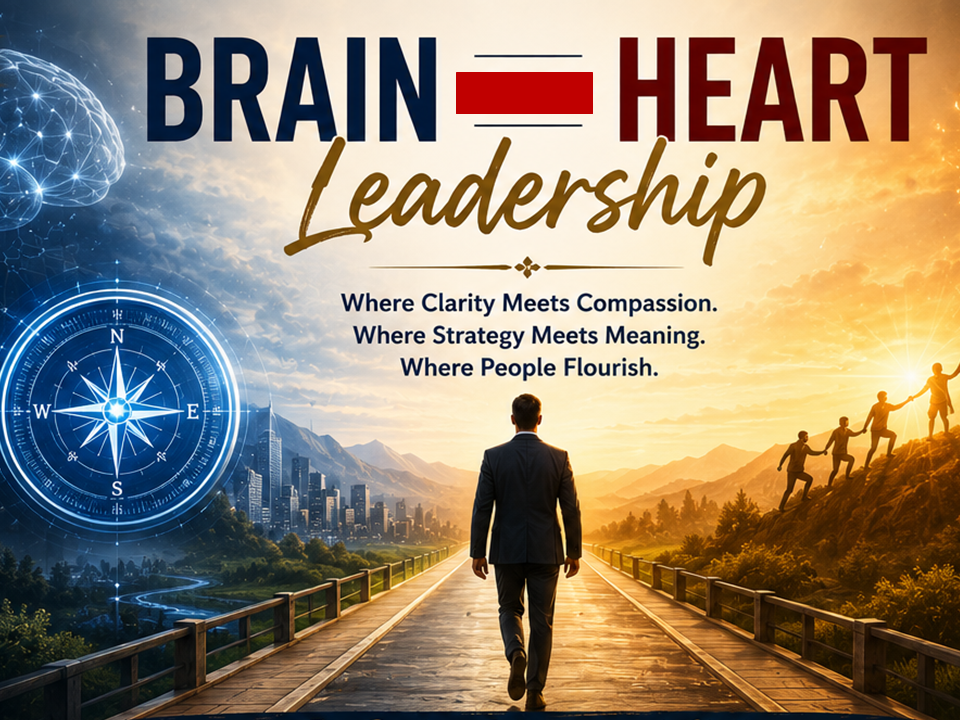
Leadership is often described as the ability to influence, inspire, and guide others. But perhaps leadership is something more mysterious: a conversation between the brain and the heart.
The brain asks, “What should we do?”
The heart asks, “Why should we care?”
A leader who possesses only the brain may build efficient systems, make intelligent decisions, and solve difficult problems. Yet people may follow the direction without feeling connected to the journey. A leader who possesses only the heart may inspire deeply, but without clarity and judgment, passion can wander without purpose.
True leadership lives in the space between the two.
Think of the brain as a compass. It studies facts, anticipates consequences, recognises patterns, and chooses a direction. The heart, however, is the north star. It gives meaning to the direction. It reminds us that behind every strategy, number, project, or decision are human beings—with fears, dreams, dignity, and hopes.
This is where interpersonal skills become essential.
Listening is the bridge between the brain and the heart. Empathy allows us to understand what people say—and sometimes, more importantly, what they cannot say. Communication transforms thoughts into shared understanding. Emotional intelligence allows a leader to notice the invisible atmosphere in a room: the hesitation behind a silence, the frustration behind a smile, the possibility hidden inside someone’s doubt.
Perhaps the most powerful leaders are not those who have all the answers, but those who create enough trust for others to discover their own answers.
A leader should therefore ask two questions before making an important decision:
“Does this make sense?” — the question of the brain.
“Does this matter to people?” — the question of the heart.
When the brain and heart walk together, leadership becomes more than authority. It becomes connection.
And perhaps that is the deeper secret of leadership: people rarely remember everything a leader said, but they remember how that leader made them think, feel, and believe in what was possible.
The fascinating question is not whether leadership needs the brain or the heart.
It is this:
What becomes possible when we learn to lead with both?